
A steep 10% grade. A documented pattern of runaway truck crashes. A mountain community with no room for another failure.
Wyoming DOT installed the CatchNet system on Teton Pass to give drivers a controlled last-resort option when heavy-vehicle brakes fail.
Location
WY-22, Teton Pass
Wilson, Wyoming
Grade
10% descent
over 5.2 miles
System
CatchNet mechanical truck arrestor
8-net configuration
Performance
Stops vehicles up to 90,000 lbs
within about 200 ft
at under 1G deceleration
Installed
2017
Operational in-service system
Teton Pass Leaves No Margin for Hesitation
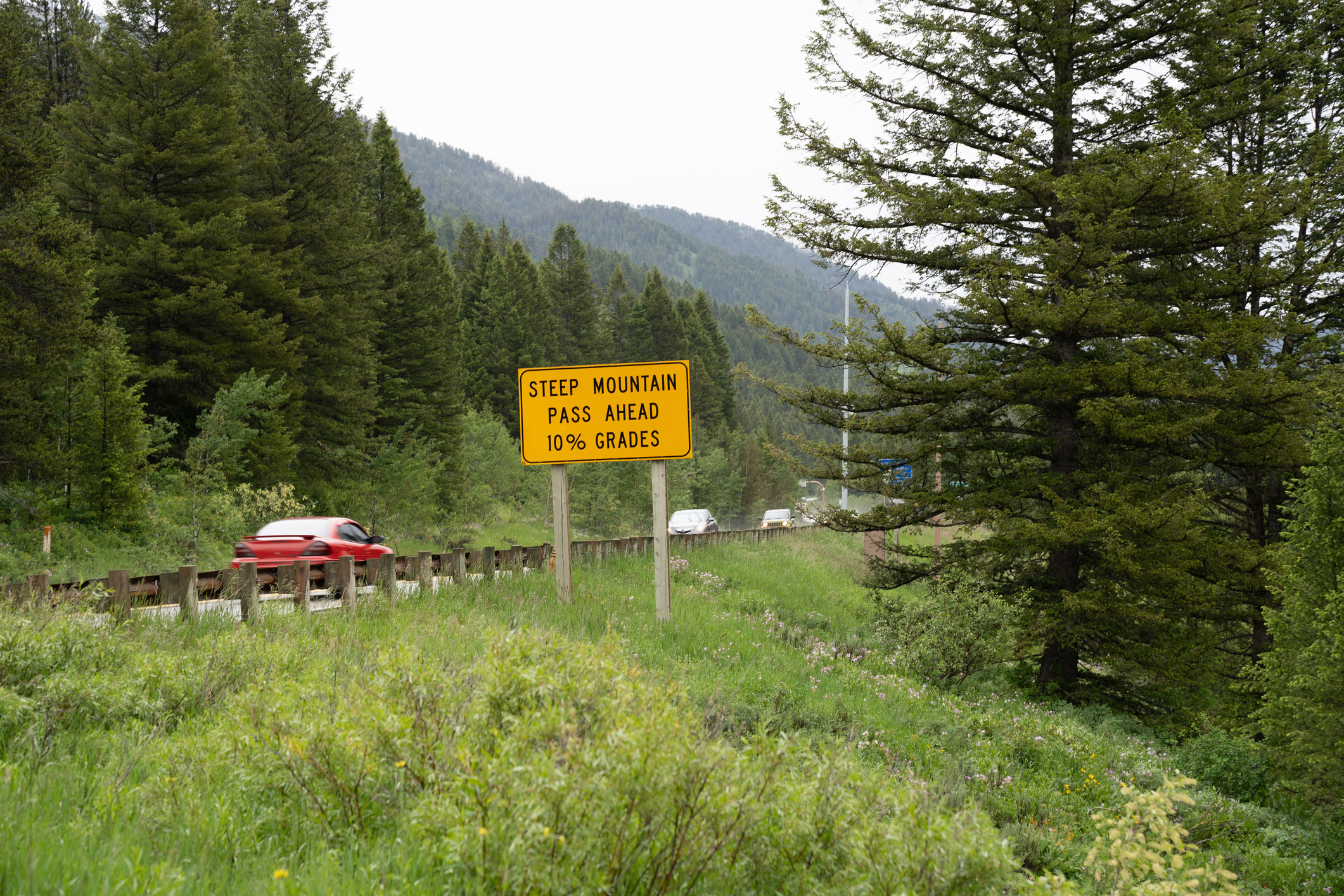
The westbound descent of WY-22 drops at a sustained 10% grade over more than five miles. For heavy vehicles, that means prolonged braking, heat buildup, and very little margin once brakes begin to fade.
The consequences were not theoretical. Before the CatchNet installation, the corridor had a documented pattern of runaway truck crashes, rollovers, injuries, and fatalities near Wilson. Motorists, cyclists, pedestrians, and residents were all exposed when a single heavy vehicle lost control.
The question was not whether another serious incident could happen. It was whether WYDOT could add a reliable last-resort safeguard before the next failure.
Why Traditional Solutions Weren’t Enough
Runaway truck risk is familiar in mountain corridors. The challenge on Teton Pass was finding a countermeasure that would work under the actual constraints of the road, not just under ideal conditions.
Where traditional approaches can fall short
- Warning signs still depend on driver reaction during an emergency.
- Escape ramps require the right space, geometry, approach, and commitment.
- Education can reduce risk, but it cannot prevent mechanical brake failure.
WYDOT needed a system that could…
- Operate as a last-resort physical safeguard.
- Fit within tight roadway and terrain constraints.
- Deliver predictable, repeatable stopping performance.
- Be inspected, repaired, and returned to service after impact.
That need led to a mechanical truck arrestor system installed on the downhill approach into Wilson.
The Teton Pass Story
2008–2015: Risk becomes a pattern
Concerns about runaway truck risk on the westbound descent of WY-22 intensified as brake-failure incidents continued near Wilson. The combination of steep grade, heavy vehicles, tight geometry, and community exposure created a persistent safety challenge.
Evaluation: A more forgiving backstop
WYDOT evaluated alternatives that could reduce crash severity when a driver had already lost braking capability. The goal was not to replace driver skill, signage, or maintenance, but to add a physical safeguard when those layers were no longer enough.
2017: CatchNet enters service
The mechanical truck arrestor system was installed on the downhill approach into Wilson. It was designed to engage only in a worst-case event and bring a runaway vehicle to a controlled stop.
Today: A permanent safety feature
The system has become part of the corridor’s safety infrastructure, providing a tested last-resort option on one of Wyoming’s most demanding mountain roads.
How the CatchNet System Works
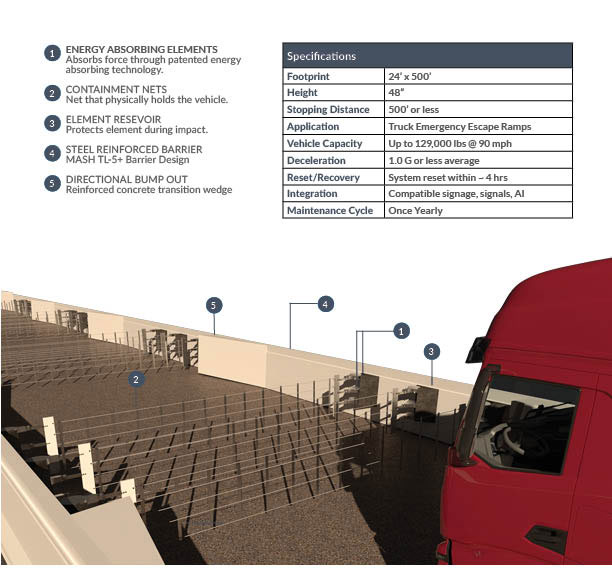
The CatchNet system performs one task with precision: safely arrest a runaway heavy vehicle after other options have failed.
The Teton Pass installation uses eight high-strength nets between concrete wall structures. Each net is connected to energy-absorbing arrestor canisters mounted along the walls.
When a vehicle enters the system:
- The vehicle contacts the net.
The net captures the vehicle and begins distributing load across the system. - The arrestors create controlled resistance.
Steel tape is drawn through friction-based arrestors, converting kinetic energy into managed deceleration. - The vehicle is brought to a stable stop.
Energy is absorbed progressively across the nets, reducing rollover risk and helping keep the vehicle upright.
Performance capability
- Controlled deceleration: under 1G
- Arrestor capacity: up to 660 kip-ft of kinetic energy
- Vehicle capacity: up to 90,000 lbs
- Typical arrest distance: about 200 ft
What the Field Taught the Design Team
Real-world performance matters more than theory.
Field event: December 2018
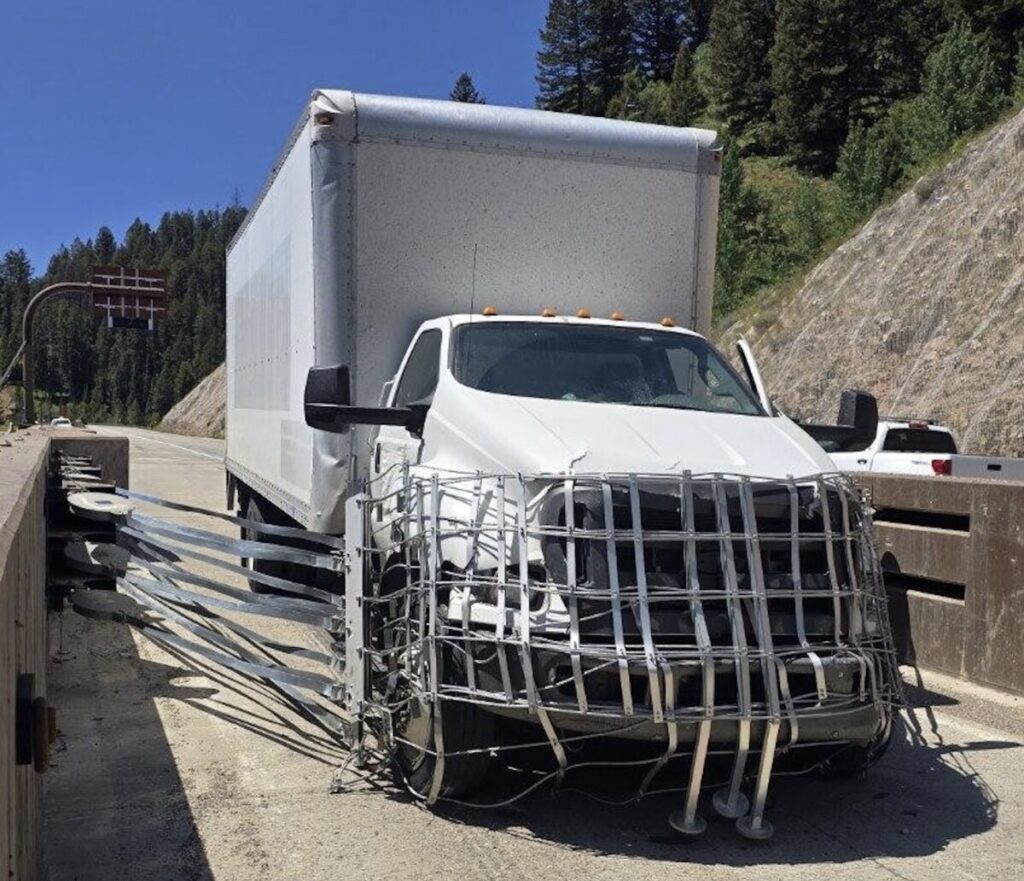
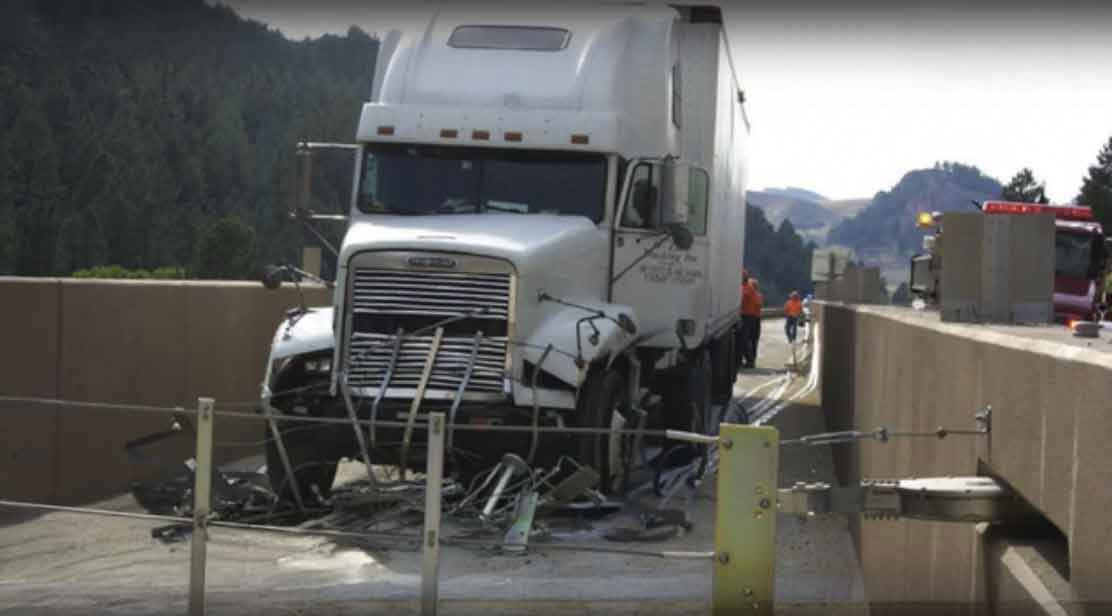
In December 2018, a truck weighing more than 33,000 lbs and traveling approximately 55–60 mph entered the CatchNet system. The vehicle was captured successfully.
The event also revealed how drivers may behave in the final seconds of an emergency. Some instinctively steer toward the concrete barrier to scrub speed. That reaction is understandable, but it can expose arrestor components mounted along the wall.
Engineering improvements implemented
- Concrete bump-out protection was added to help shield arrestor components.
- The bump-outs guide vehicles toward the center of the capture zone.
- The Teton Pass installation was retrofitted with the improved configuration.
The lesson is simple: observe the real world, strengthen the design, and make the next engagement safer.
Demonstration and Validation Testing
The system was validated through a full-scale live-driver demonstration using a loaded dump truck.
Video placement: keep this embed here. It gives the case study a proof point immediately after the system explanation.
During the test, a 65,000 lb vehicle traveling approximately 60 mph entered the system and was brought to a controlled stop in under 200 ft. The engagement used only four of the eight installed nets, demonstrating both stopping capability and performance margin.
The vehicle remained upright and stable throughout the engagement, providing agencies with confidence that cannot be achieved through modeling alone.
Results and Safety Impact
The impact of the Teton Pass system is best understood through outcomes.
In the eight years prior to installation, the 3.5-mile downhill segment into Wilson recorded:
- 11 large-vehicle crashes
- 9 overturns
- 2 fatalities
- 7 injuries
Following installation, 17 large-vehicle incidents occurred within the corridor. The outcomes show a clear pattern.
When the escape system was used
(11 incidents)
- 0 overturns
- 1 minor injury
When the escape system was not used
(6 incidents)
- 2 overturns
- 4 injuries
The CatchNet installation does not eliminate every crash, but when drivers use the system, outcomes are significantly safer.
Real-World Perspective
Data explains performance. Firsthand accounts explain impact.
One driver who successfully engaged the system described the moment plainly:
“It saved my life. I had the brake pedal to the floor and nothing was happening. I couldn’t cross traffic to reach the escape ramp. The net was the only option I had.”
Law enforcement officials working the corridor have also described the system as a critical safety backstop for drivers and the surrounding community.
“This system has prevented serious injury and death on multiple occasions and has become a critical safety feature on this corridor.”
— Wyoming State Patrol
Maintenance, Repair, and Operational Reality
Effectiveness in the field has to be matched by practical recovery after impact.
Most Teton Pass engagements have required repair to four nets or fewer, allowing the system to return to service without full reconstruction.
This modular repair approach is intentional. Components are engineered to absorb energy and, when necessary, sacrifice locally so damage is limited to specific elements rather than the entire system.
For WYDOT, that means an extreme-condition safety asset that is also operationally sustainable within standard maintenance programs.
Looking Ahead
Based on observed performance and real-world outcomes, WYDOT has evaluated additional opportunities to expand mechanical arrestor use along the WY-22 corridor.
Potential future installations could add capture opportunities above and below the existing system, further improving protection for drivers and the surrounding community.
The Teton Pass installation shows how engineered last-resort systems can reduce the consequences of inevitable failures in high-risk corridors.
Explore Vehicle Arresting Systems
CatchNet systems can be configured for steep grades, constrained corridors, managed lanes, work zones, and other high-risk vehicle entry points.
Share
Recent Posts
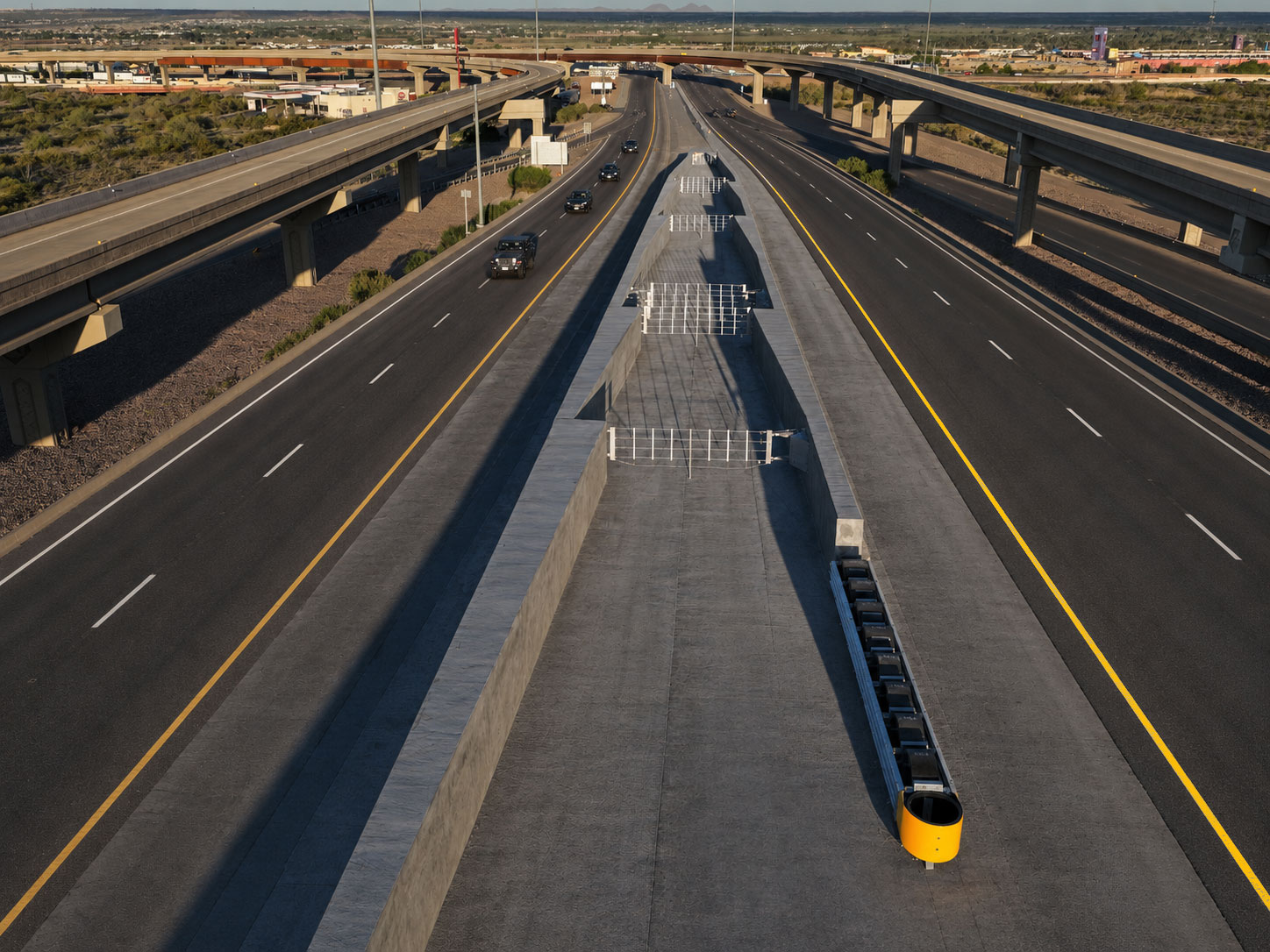
How CatchNet Turned a Tight El Paso Median Into a Truck Escape Ramp
June 30, 2026
Impact Technologies Case Study Designing a Truck Escape Ramp In a Constarined Environment On El Paso’s Transmountain corridor, TxDOT took a proactive Safe...

The CatchNet System: A Critical Safeguard on Wyoming’s Steepest Corridor
January 29, 2026
A steep 10% grade. A documented pattern of runaway truck crashes. A mountain community with no room for another failure.Wyoming DOT installed the...
When Innovation Meets the Mountain: How Wyoming’s CatchNET Redefined Truck Safety on Teton Pass
November 7, 2025
On the steep grades of Wyoming’s Teton Pass, a new kind of safety engineering is quietly changing how runaway vehicles are stopped. The...