

FlexNet
Vehicle Arresting Barrier
Tower-Based Vehicle Arresting System for Managed and Reversible Lanes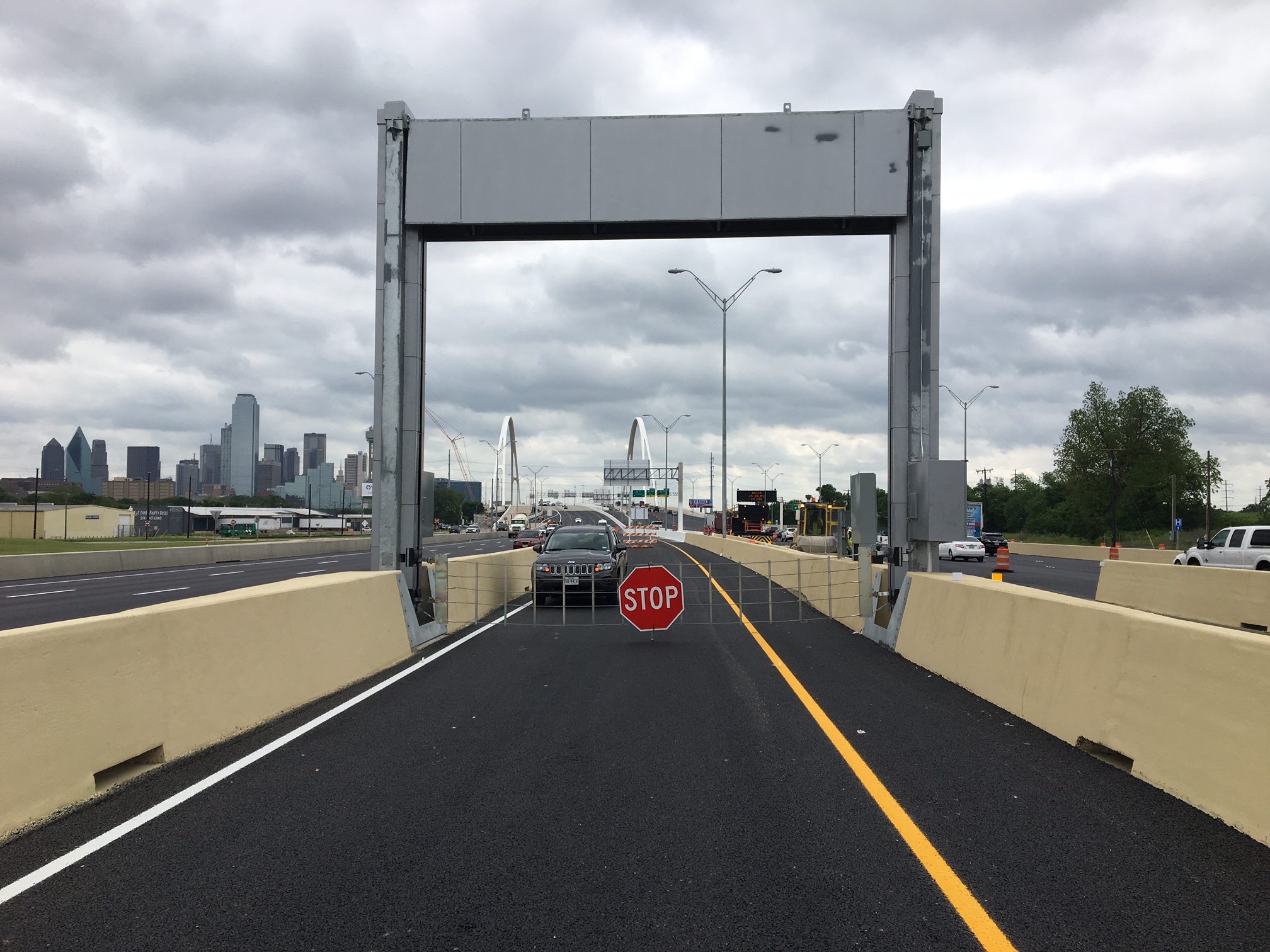
A Proven Managed Lane Vehicle Arresting System
Designed for reversible, HOV, and dynamically controlled lanes, FlexNet is a tower-based vehicle arresting system that deploys an energy-absorbing net to decelerate and contain unauthorized or wrong-way vehicles in constrained roadway environments.
Engineered to operate within strict clearance, activation time, and space limitations, FlexNet provides a compact alternative where traditional barriers, fixed gates, or escape ramps are not feasible.
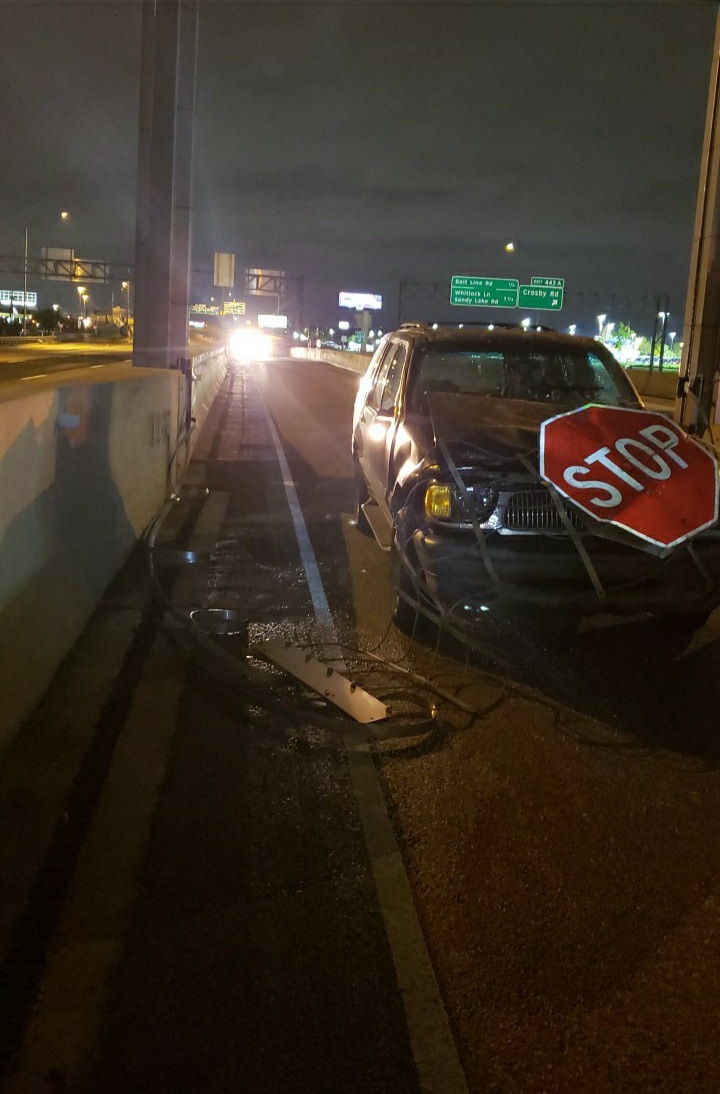
How the FlexNet Vehicle Arresting System Works
FlexNet is a tower-based vehicle arresting system designed to manage lane access in reversible and controlled roadway environments. The system remains out of the travel way during normal operations and is deployed according to defined schedules or operational commands when lane direction or access restrictions change.
FlexNet functions as a physical lane barrier first, with vehicle arresting capability present only when intrusion occurs.
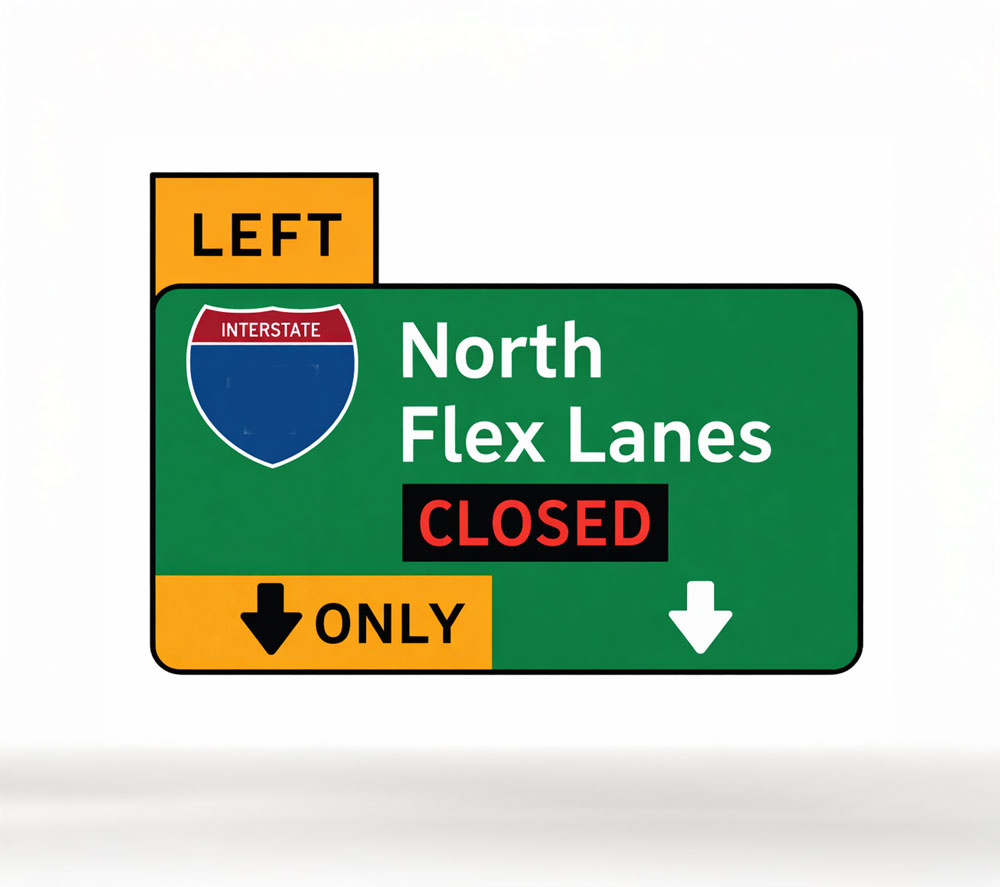
Step 1: Tower Deploys the Barrier
At scheduled times or when lane control conditions change, the FlexNet tower deploys the net assembly across the roadway. Deployment is controlled and repeatable, allowing the barrier to be positioned without permanently obstructing traffic.
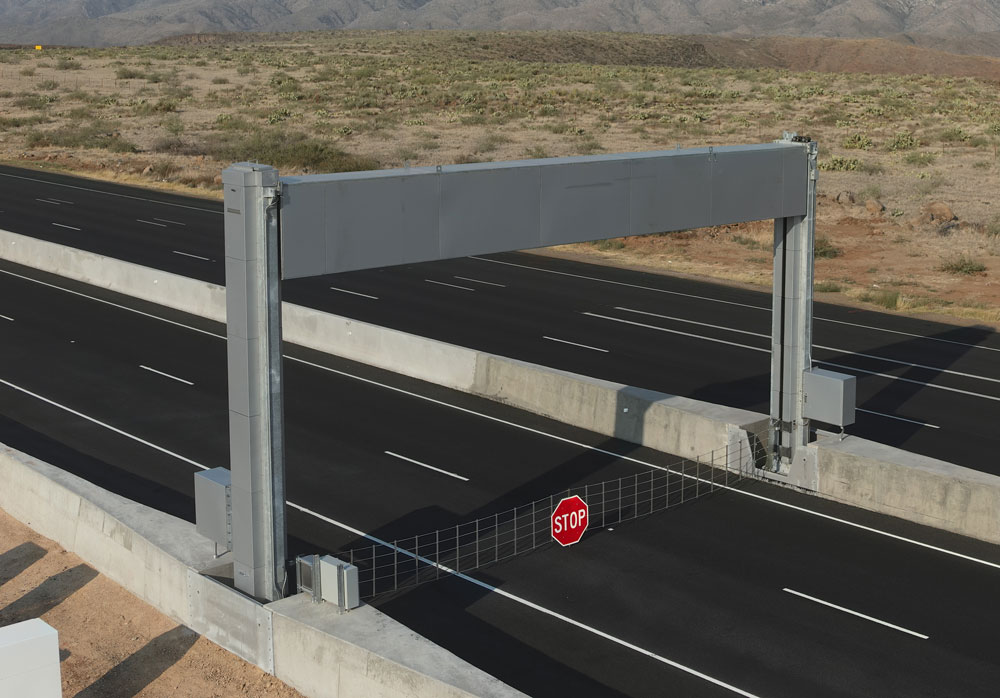
Step 2: Lane Access Is Physically Blocked
Once deployed, the net forms a physical barrier that blocks vehicle entry into the restricted or opposing lane. This visible boundary reinforces lane control signals and signage, discouraging unauthorized access before intrusion occurs.
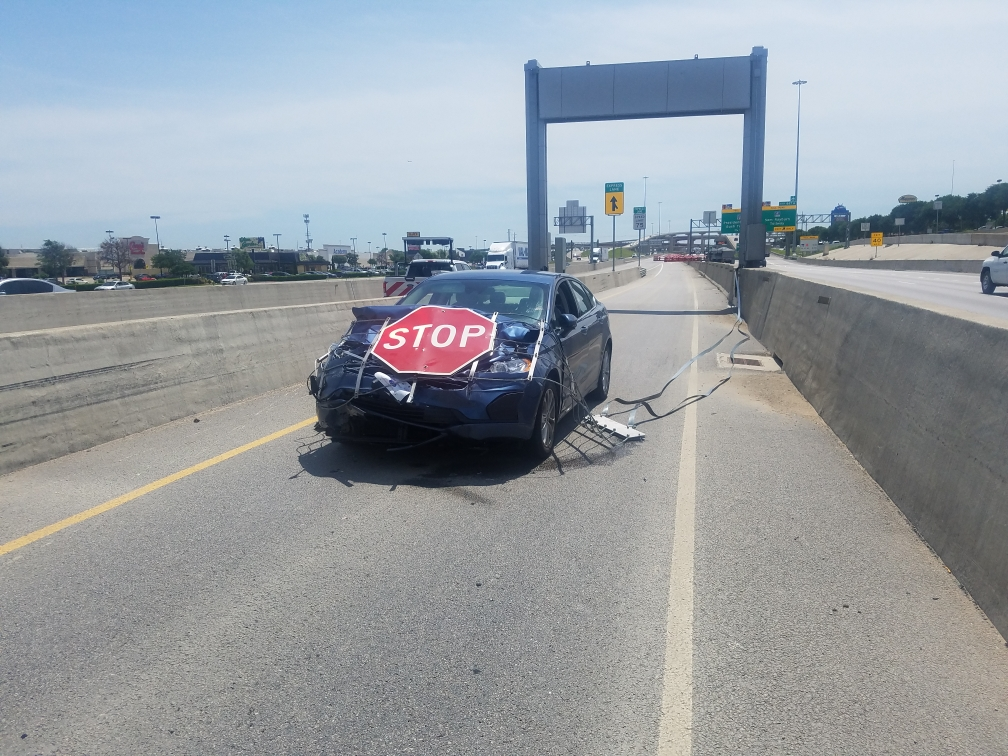
Step 3: Barrier Remains Active During the Controlled Period
The FlexNet system remains deployed for the duration of the scheduled or operational lane restriction. If a vehicle attempts to enter the closed lane, the energy-absorbing net engages to arrest vehicle movement within the controlled area.
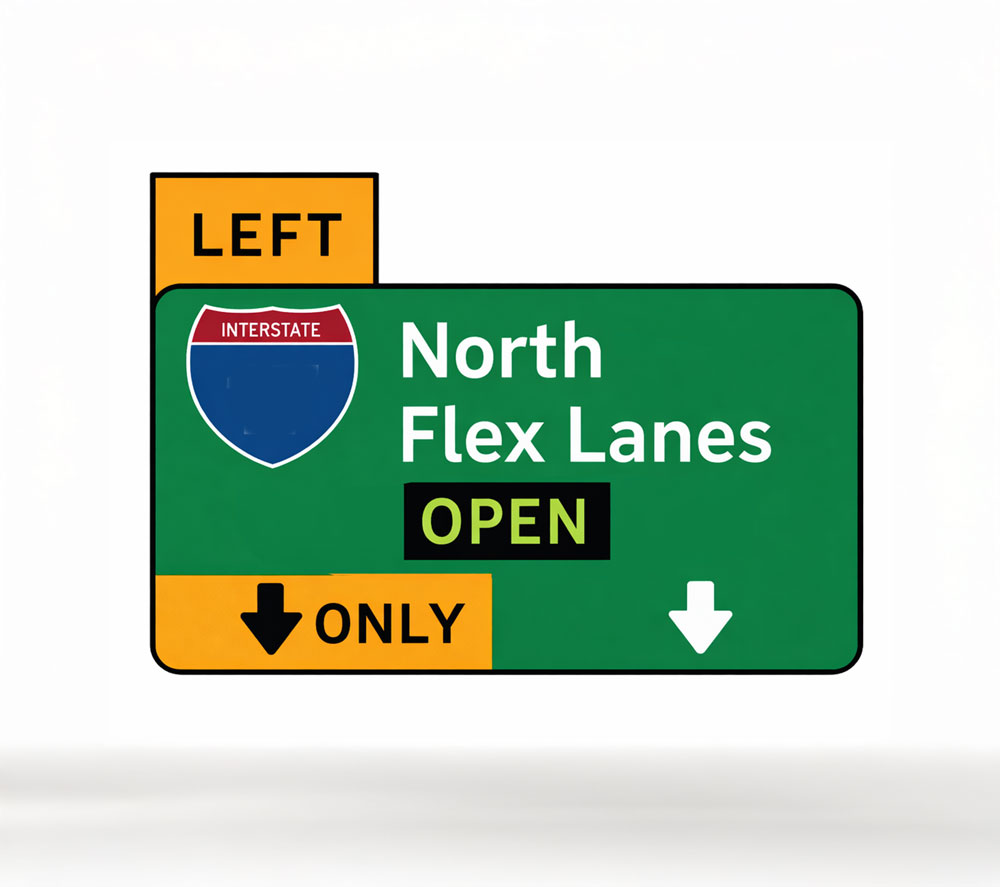
Step 4: Tower Retracts and Lane Is Returned to Service
When lane control conditions change, the tower retracts the net assembly and returns the system to its standby position. Normal traffic flow resumes with no permanent obstruction in the roadway.
See it Installed

Drawbridge & Movable Bridge Protection
FlexNet® can be used as a vehicle arresting system at drawbridges and other movable bridge approaches where preventing an unauthorized or out-of-control vehicle from entering an open bridge span is critical. Installed at strategic approach locations, the system provides a compact protective barrier that can rapidly decelerate and stop a vehicle before it reaches the bridge opening, helping protect motorists, bridge operators, marine traffic, and critical infrastructure.
Its relatively small footprint makes FlexNet especially well suited for existing bridge sites where roadway width, structural constraints, and limited available space can make conventional vehicle arresting solutions difficult to accommodate.
Compact footprint
Requires minimal roadside and in-lane space compared to fixed barriers or structural gates. Designed for constrained corridors, bridge approaches, and managed lane environments with limited right-of-way.CONTROLLED DEPLOYMENT
Deploys and retracts based on defined schedules or operator commands. Remains out of the travel way during normal operations and is positioned only when lane control conditions require it.INTRUSION MITIGATION
Functions as a physical lane boundary to limit unauthorized or wrong-way vehicle entry into controlled lanes. Reinforces lane control signals with a visible, physical barrier.SYSTEM INTEGRATION
Designed to operate alongside lane control signals, signage, and traffic management protocols. Supports coordinated lane direction changes and access restrictions.SERVICEABLE DESIGN
System components are accessible for inspection, maintenance, and reset following deployment or activation. Designed for predictable servicing without permanent roadway disruption.PROVEN PERFORMANCE
Energy-absorbing net technology has been validated through controlled testing and decades of in-service use to manage vehicle momentum in controlled roadway environments.Where are Vehicle Arresting Barriers installed?
Explore the interactive map below