
Impact Technologies Case Study
Designing a Truck Escape Ramp In a Constarined Environment
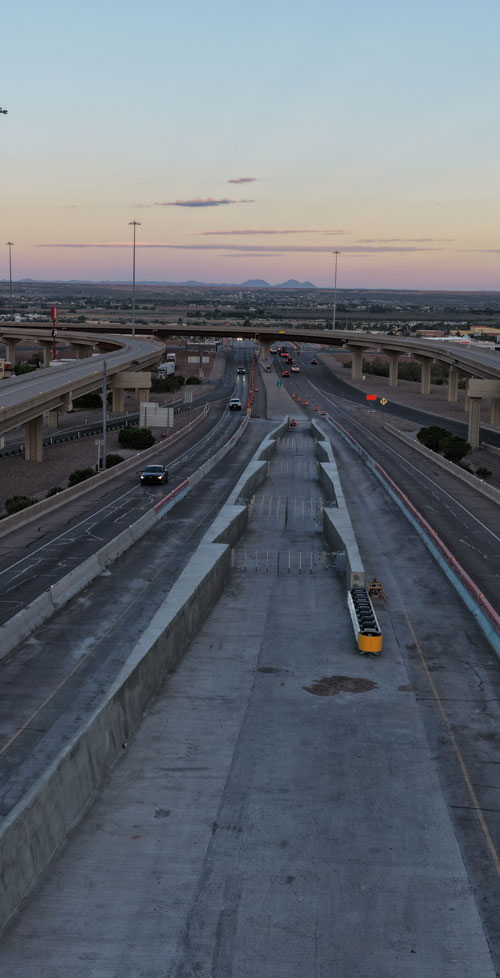
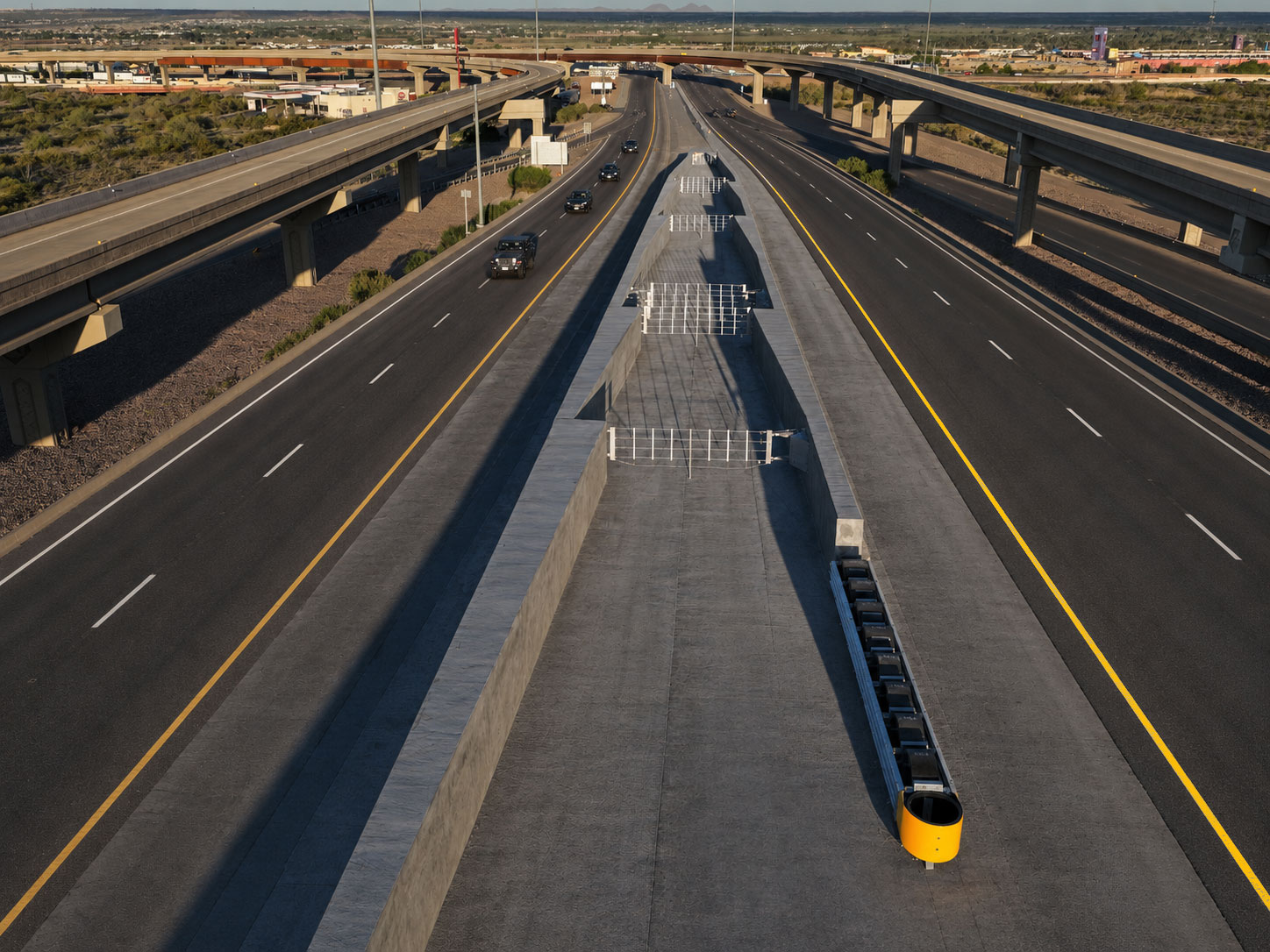
On El Paso’s Transmountain corridor, TxDOT took a proactive Safe System approach to a high-risk roadway condition: heavy vehicles, steep grades, and limited space for a conventional gravel runaway truck ramp. CatchNet added a redundant layer of protection by converting the available median footprint into an engineered vehicle arresting zone.
The design challenge: create a final intervention point for runaway trucks without widening the corridor, acquiring new right-of-way, or relying on a long gravel escape ramp.
The answer: a median-based CatchNet truck escape ramp designed to manage kinetic energy in a compact, predictable footprint.
The Problem
TxDOT added a final layer of protection inside a constrained corridor.
On El Paso’s Transmountain corridor, TxDOT applied a proactive approach to a known runaway-truck risk. With steep grades, heavy commercial vehicle exposure, and limited space for a conventional gravel escape ramp, the project required a compact way to add emergency stopping performance inside the existing interstate footprint.
CatchNet TEER provided that redundancy by converting the available median into an engineered vehicle arresting zone. The result is a final controlled-intervention point designed around the corridor’s geometry, traffic conditions, and operational needs.
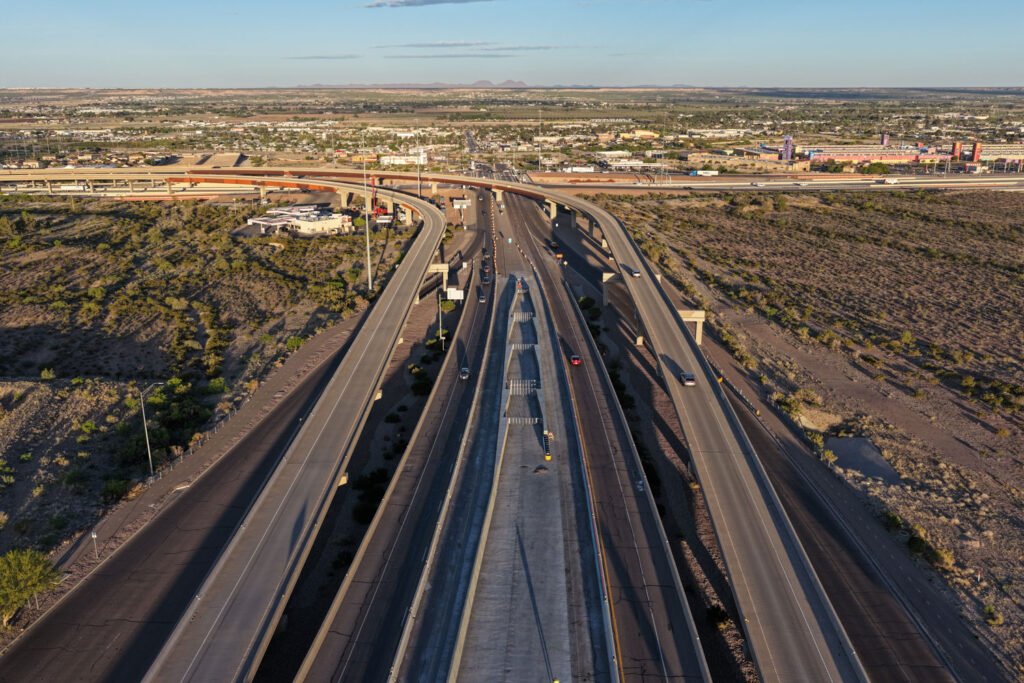
The El Paso installation converts constrained median space into an engineered vehicle arresting zone within the existing interstate corridor.
What made this project different
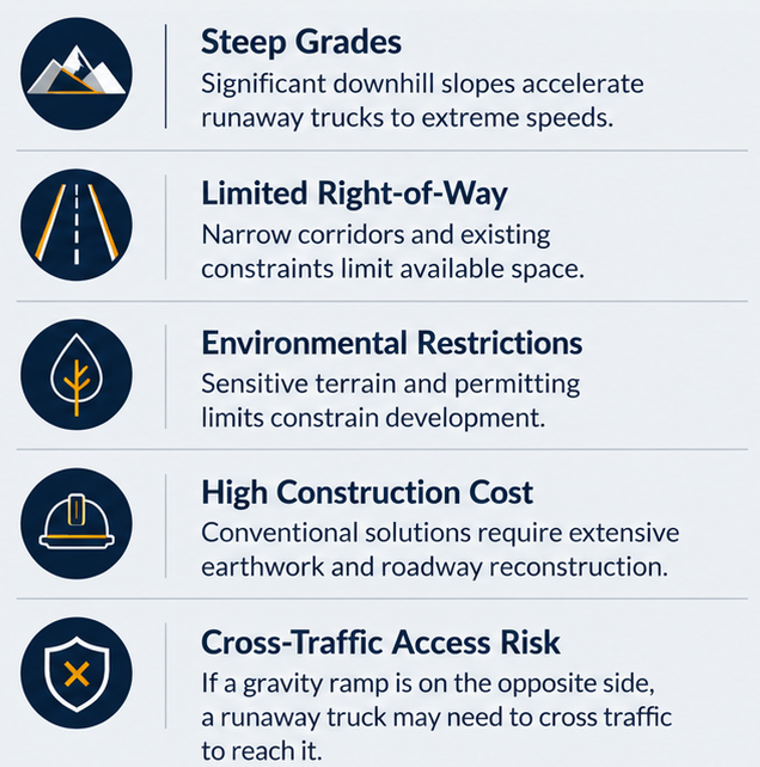
Design Constraints
A constrained corridor required controlled stopping performance within the available roadway footprint.
The I-10 Transmountain corridor presented a steep-grade condition with limited right-of-way, active interstate traffic, and a constrained median environment. Traditional gravity escape ramps depend on long runout distance, elevation gain, and a large receiving area. The El Paso site required a compact engineered system that could arrest a heavy vehicle within the existing corridor geometry.
CatchNet TEER provided a different approach: controlled deceleration through staged energy absorption, installed within the available median footprint and configured for long-term agency operation.
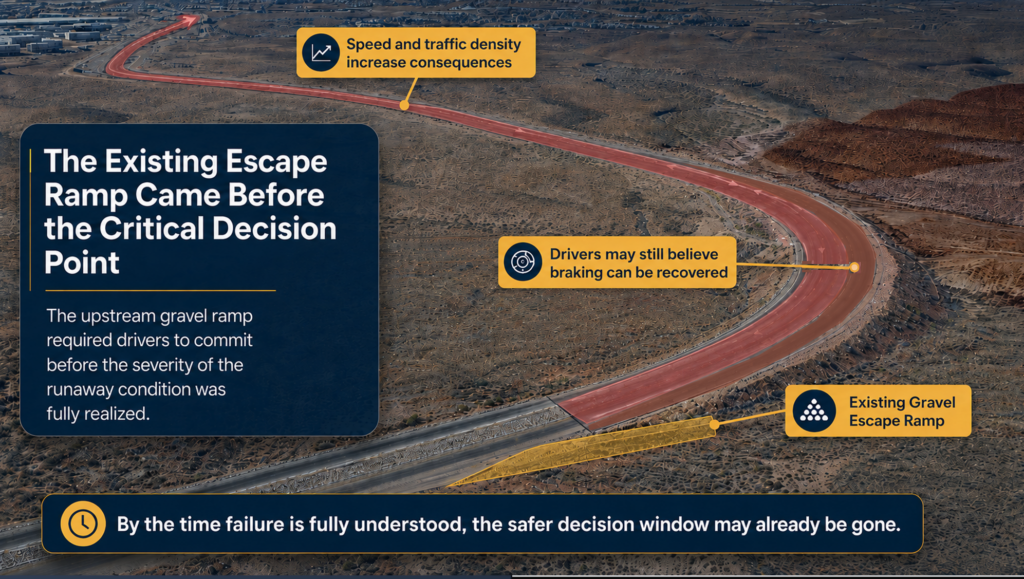
1
Corridor Geometry
The site combined steep grade, high-speed interstate traffic, and limited available footprint. The design challenge was to provide a final stopping option within the physical limits of the existing corridor.
2
Compact Arresting Performance
Traditional escape ramps rely on long runout distance and elevation gain. CatchNet TEER uses controlled deceleration and energy absorption to provide vehicle arresting performance in a much smaller footprint.
3
Agency Operation
The installation needed to function as a long-term safety asset. The system was configured for inspection, repair, and reset by trained crews after an activation.
THE SYSTEM APPROACH
Controlled deceleration within the existing roadway footprint.
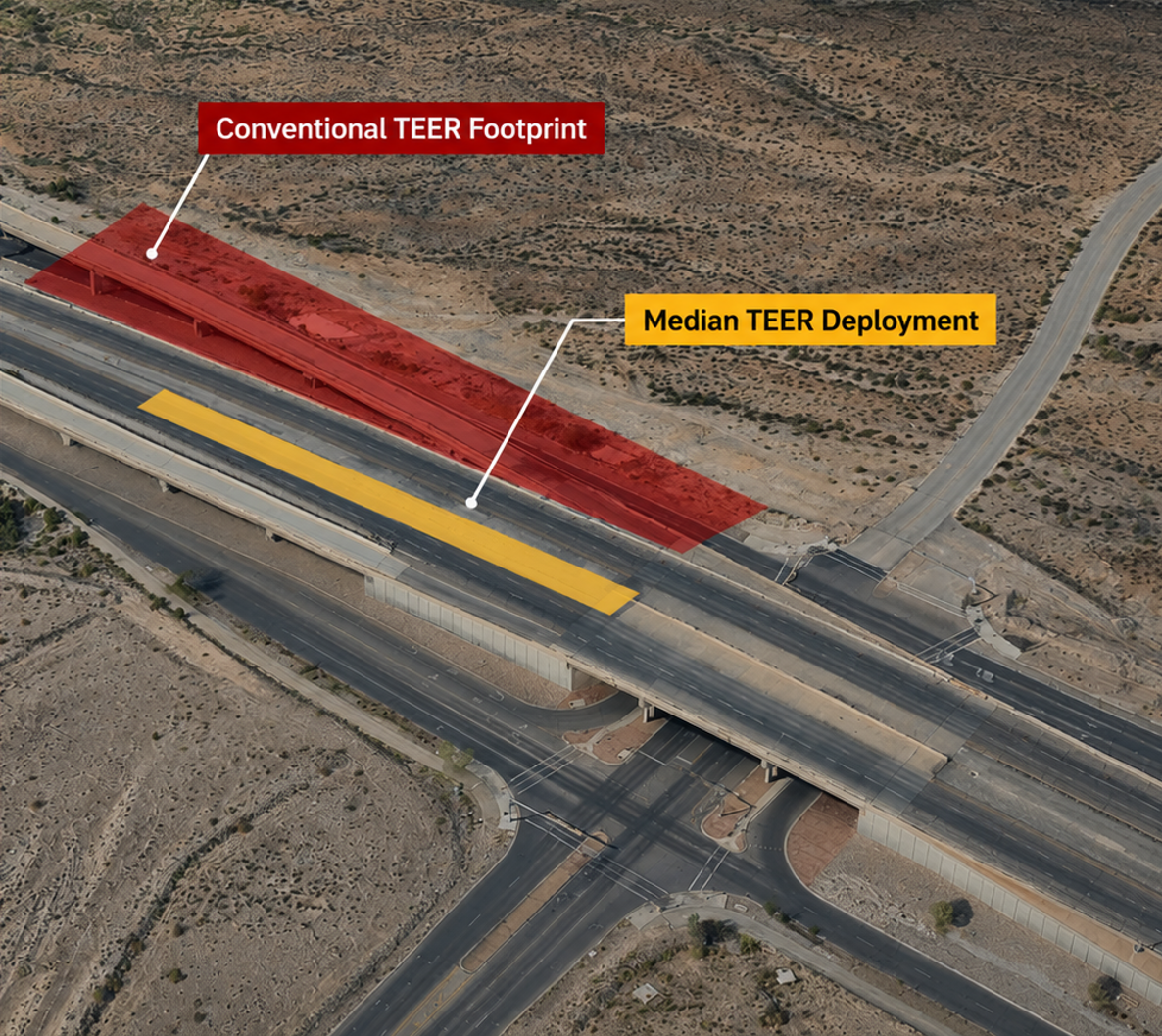
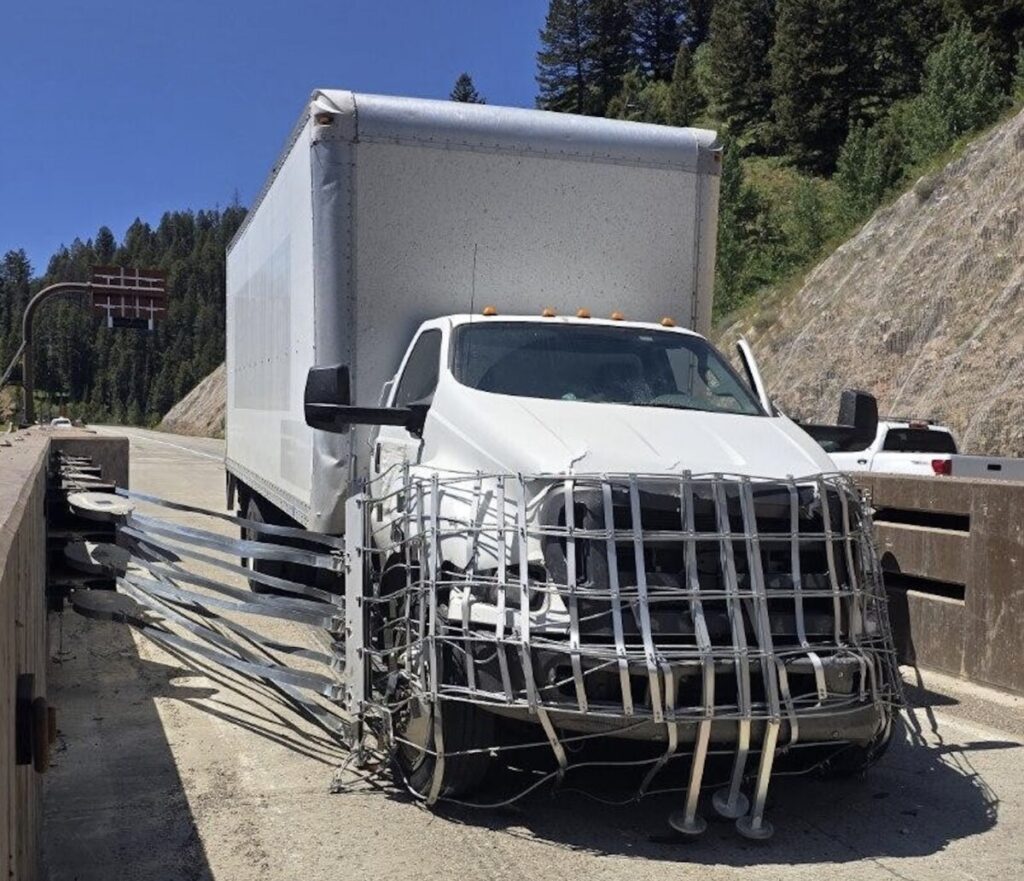
CatchNet TEER allowed the design team to provide emergency vehicle arresting performance inside the existing median. Instead of relying on the extended runout distance and elevation gain associated with conventional gravity ramps, the system uses staged net engagement and energy-absorbing arrestors to manage vehicle kinetic energy within a defined capture zone.
This approach turned constrained corridor geometry into an engineered stopping zone. The median became more than available space. It became the core safety asset.
System Anatomy
Compact footprint. Active energy management.
How the CatchNet TEER system manages vehicle energy
- Vehicle entry
A runaway vehicle enters the median escape area through a defined approach path aligned with the corridor geometry - Net engagement
The vehicle engages the net array. The net captures the vehicle and distributes loading across the arresting system. - Progressive energy absorption
Arrestor units introduce controlled resistance as the vehicle moves through the capture zone. This staged resistance reduces speed without relying on a rigid impact.. - Controlled deceleration
The system brings the vehicle to a controlled stop while supporting vehicle stability and reducing the potential for secondary impact or rollover.
DESIGN INTEGRATION
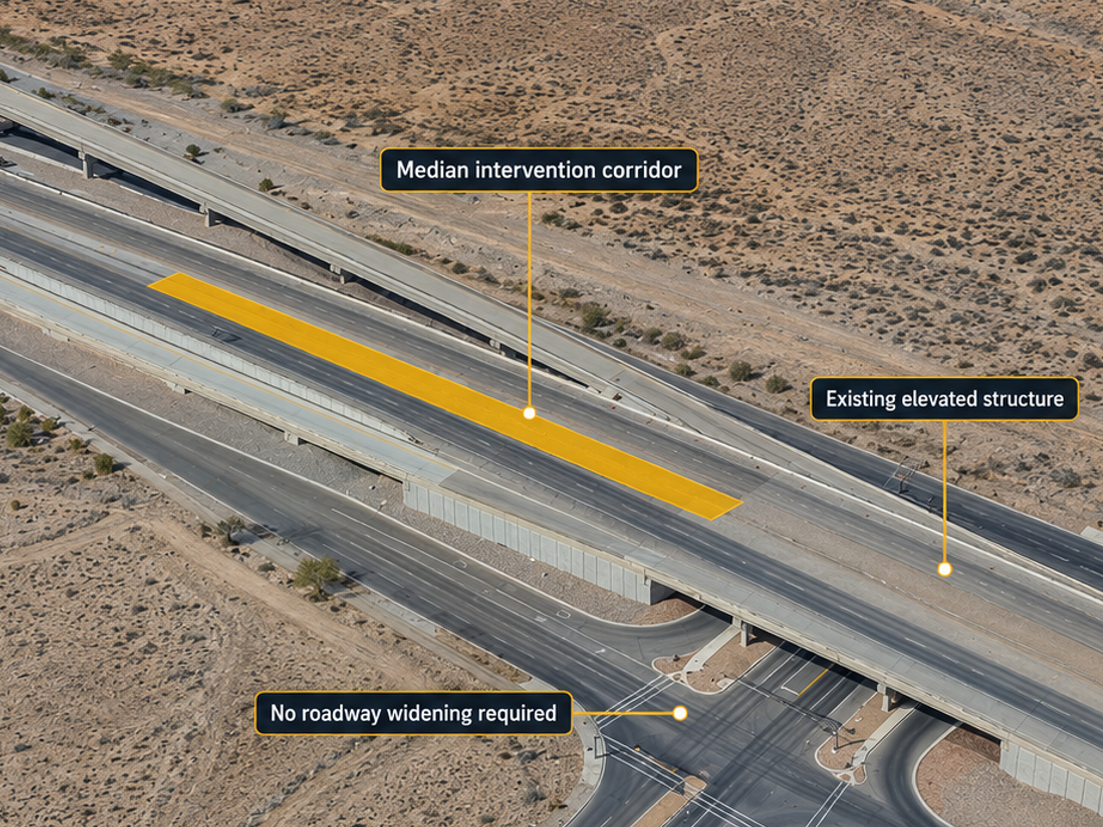
The design used available median space as the arresting zone.
A
Geometry
The median configuration creates a defined vehicle path and capture zone within the existing transportation corridor. This allows the system to use available roadway space without requiring a traditional long gravel arrester bed.
B
Energy management
CatchNet TEER manages vehicle kinetic energy through staged net engagement and energy-absorbing arrestors. The design objective is controlled deceleration within the available footprint, rather than abrupt impact or passive containment.
C
Maintainability
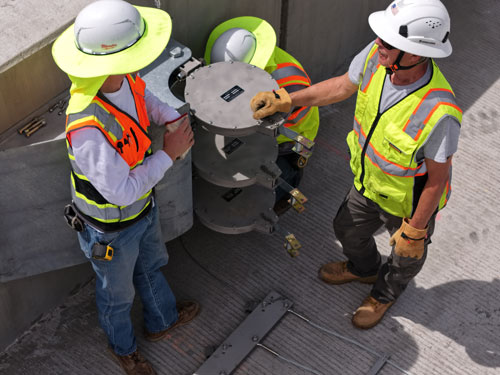
The installation was designed as an operational safety asset. Impact Technologies provided hands-on training so TxDOT crews can inspect, repair, and reset the system after an activation.
In El Paso, the median became an engineered capture zone: a compact, maintainable system designed to manage vehicle energy where conventional ramp geometry was constrained.
Implementation
From constrained geometry to field-ready vehicle arresting system.
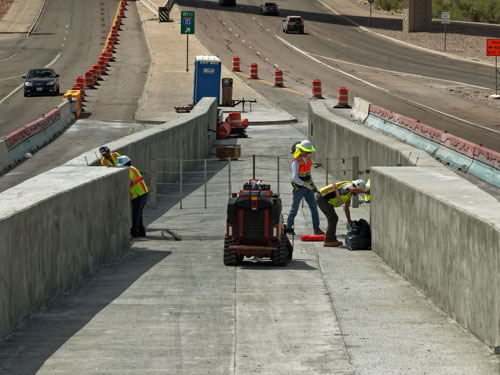
Need identified
TxDOT added a redundant layer of protection in the I-10 Transmountain corridor, applying Safe System principles to help manage runaway-truck risk before a severe crash could occur. The project created a final intervention point for descending vehicles within a constrained interstate environment.
Design refined
The available median geometry was assessed for a compact arresting system within the existing roadway envelope.
System installed
CatchNet TEER was configured to provide controlled deceleration through staged net engagement and energy absorption.
Crews trained
Impact Technologies worked with TxDOT crews on system operation, inspection, repair, and reset after activation.
Why It Matters
A replicable model for constrained-corridor safety design.
The El Paso CatchNet installation demonstrates how transportation agencies can add a redundant layer of protection in locations where high-energy vehicle events must be managed within limited roadway space. For mountain roads, border corridors, elevated interstate segments, and urban highways, the lesson is direct: when the footprint is constrained, the safety system must be engineered into the corridor.
Broader Application
CatchNet gives transportation agencies another design option when a truck escape ramp is needed and conventional ramp geometry is limited. The El Paso project converted a constrained median into a controlled stopping environment, balancing roadway geometry, kinetic-energy management, and long-term operational practicality.
Explore CatchNet for constrained corridors
Impact Technologies helps agencies and design teams evaluate where net-based vehicle arresting systems can solve roadway safety challenges that traditional countermeasures cannot fully address.
Share
Recent Posts
How CatchNet Turned a Tight El Paso Median Into a Truck Escape Ramp
June 30, 2026
Impact Technologies Case Study Designing a Truck Escape Ramp In a Constarined Environment On El Paso’s Transmountain corridor, TxDOT took a proactive Safe...

The CatchNet System: A Critical Safeguard on Wyoming’s Steepest Corridor
January 29, 2026
A steep 10% grade. A documented pattern of runaway truck crashes. A mountain community with no room for another failure.Wyoming DOT installed the...
When Innovation Meets the Mountain: How Wyoming’s CatchNET Redefined Truck Safety on Teton Pass
November 7, 2025
On the steep grades of Wyoming’s Teton Pass, a new kind of safety engineering is quietly changing how runaway vehicles are stopped. The...